
Urban Autonomy Lab
Helping cities learn, adapt, and govern autonomous mobility.
Sign up to our newsletter (Coming Soon)



The Urban Autonomy Lab is a living research platform built around a comprehensive and dynamic evidence base. Its central white paper, Autonomous Mobility and the Adaptive City, draws on that evidence to set out a governance and investment toolkit for urban autonomous mobility.
Autonomous mobility is arriving faster than cities can govern it: commercial robotaxi volume has grown from ~10,000 to ~500,000 rides/week since 2023, and the curve steepened sharply in 2026. Discourse and regulation have focused on the vehicle itself; the unaddressed questions — how to price curb access, the grid utility's role, what replaces downtown parking revenue — reach far beyond transportation. The decisions cities make in the next 12 to 18 months will shape fiscal and spatial outcomes for decades.
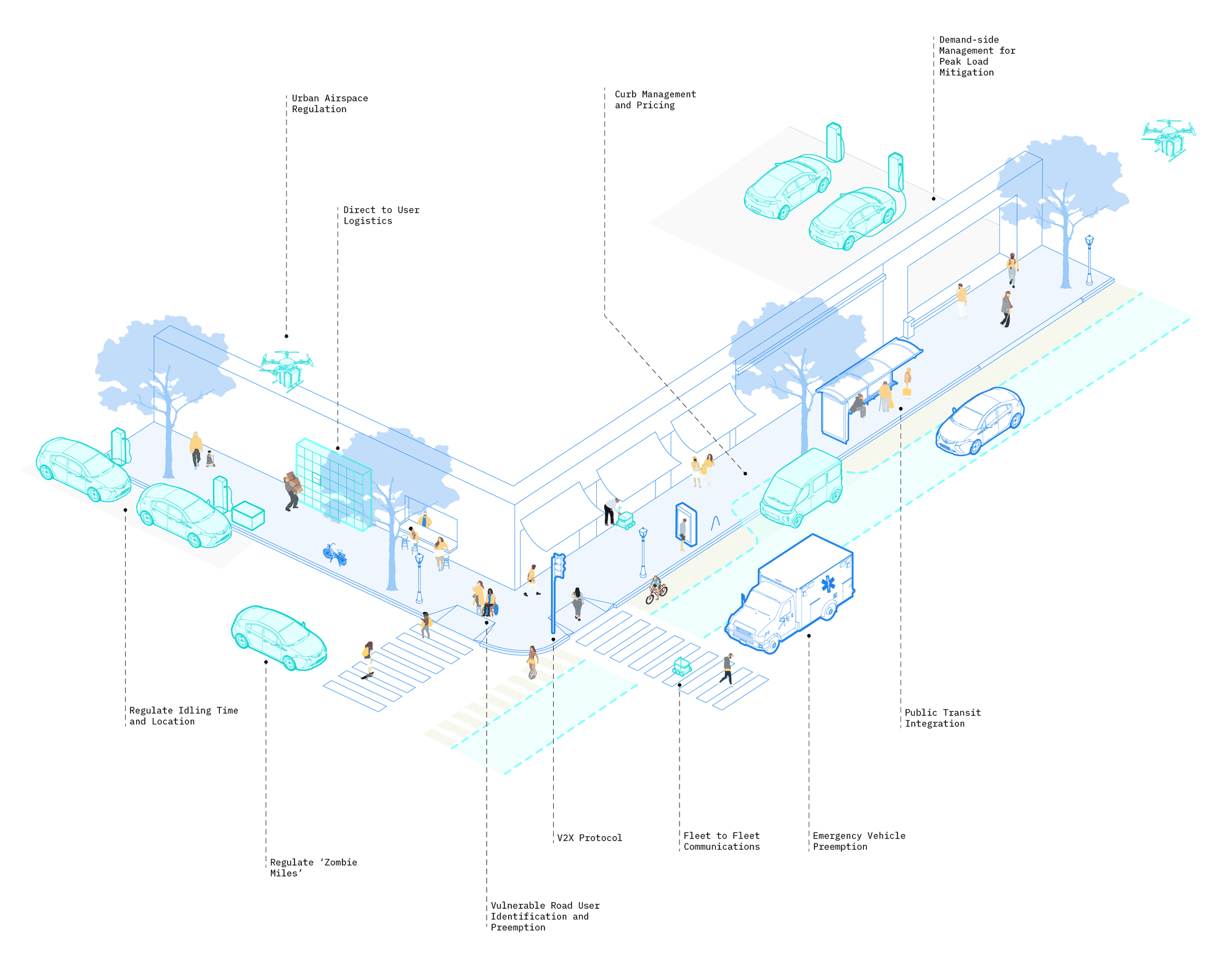
Autonomous Mobility has the potential to either create or destroy value in the city via 5 channels. Administrations can influence the outcome on each dimension through proactive governance and policy.
Five value levers-
Fiscal
revenue base, fees, and the public balance sheet
-
Energy
grid load, depot charging, and utility coordination
-
Real estate
parking-dependent land, depots, and development value
-
Spatial allocation
curb, road space, and the public realm
-
Legitimacy
public trust, safety confidence, and consent
Each lever carries both value at risk and value created; governance decides which.
The Paper
An interactive white paper arguing outcomes are set by governance, not technology.
Evidence Base
A continuously updated archive of real-world developments: rulemakings, deployments, incidents, pilots, financing moves.
Workshops and Tools
Working sessions and diagnostics that turn the paper's frameworks into decisions for a specific city, utility or portfolio.
Community and Pilots
Cities, operators, utilities and investors designing and evaluating pilot governance together.
For the people making, financing, and governing autonomous-mobility decisions: city staff and transportation authorities, technologists and operators, utilities, real-estate and infrastructure investors, and economic-development leaders.